
The Architecture: Two Loops on One Substrate
Diana Hu and Andrej Karpathy each described one half of the same machine. Here's the whole architecture. Article 2 of 4 in the AI-Native Startup Architecture series.

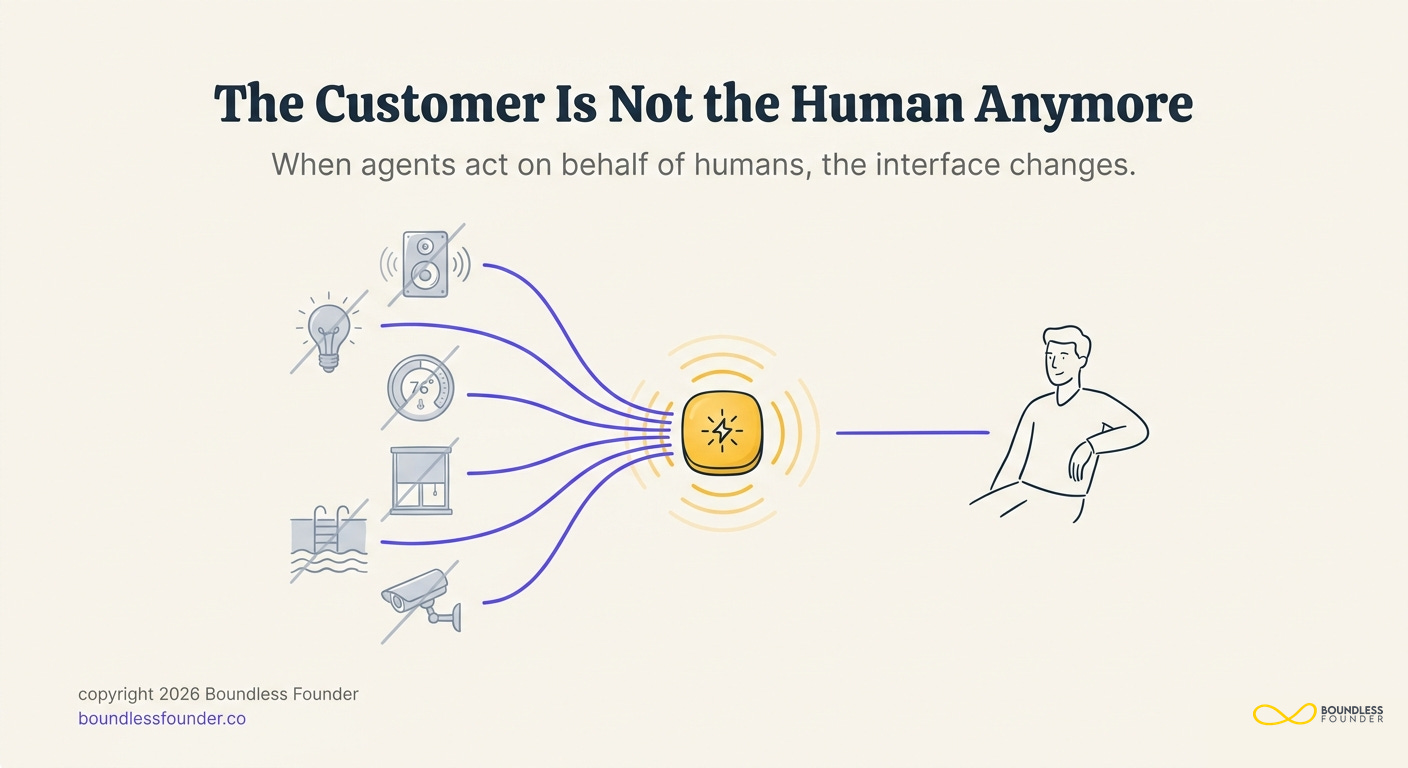
A few months ago, Andrej Karpathy wired his house to a single AI agent. In about three prompts, the agent scanned his local network, found the Sonos system, reverse-engineered its API, and started playing music in his study. Then it did the same for the lights, HVAC, shades, pool, and security camera. Now it texts him on WhatsApp when a FedEx truck pulls up, with a photo. One conversational interface replaced six separate smart-home apps (No Priors, March 2026).
The thing he said about it is the thing I want you to hold onto for this whole piece:
"These apps that are in the app store for using these smart home devices… shouldn't even exist in a certain sense. Shouldn't it just be APIs and shouldn't agents be just using it directly… the customer is not the human anymore. It's agents who are acting on behalf of humans, and this refactoring will probably be substantial."
If agents are the new customer — if the thing reading your interfaces, your data, and your decisions is increasingly a machine acting for a human — then the company that serves them has to be shaped differently. Last week I argued that the difference between a conventional startup and an AI-native one is structural: a closed loop where an intelligence layer routes information, not a human-routing layer. This piece is about what that structure actually is.
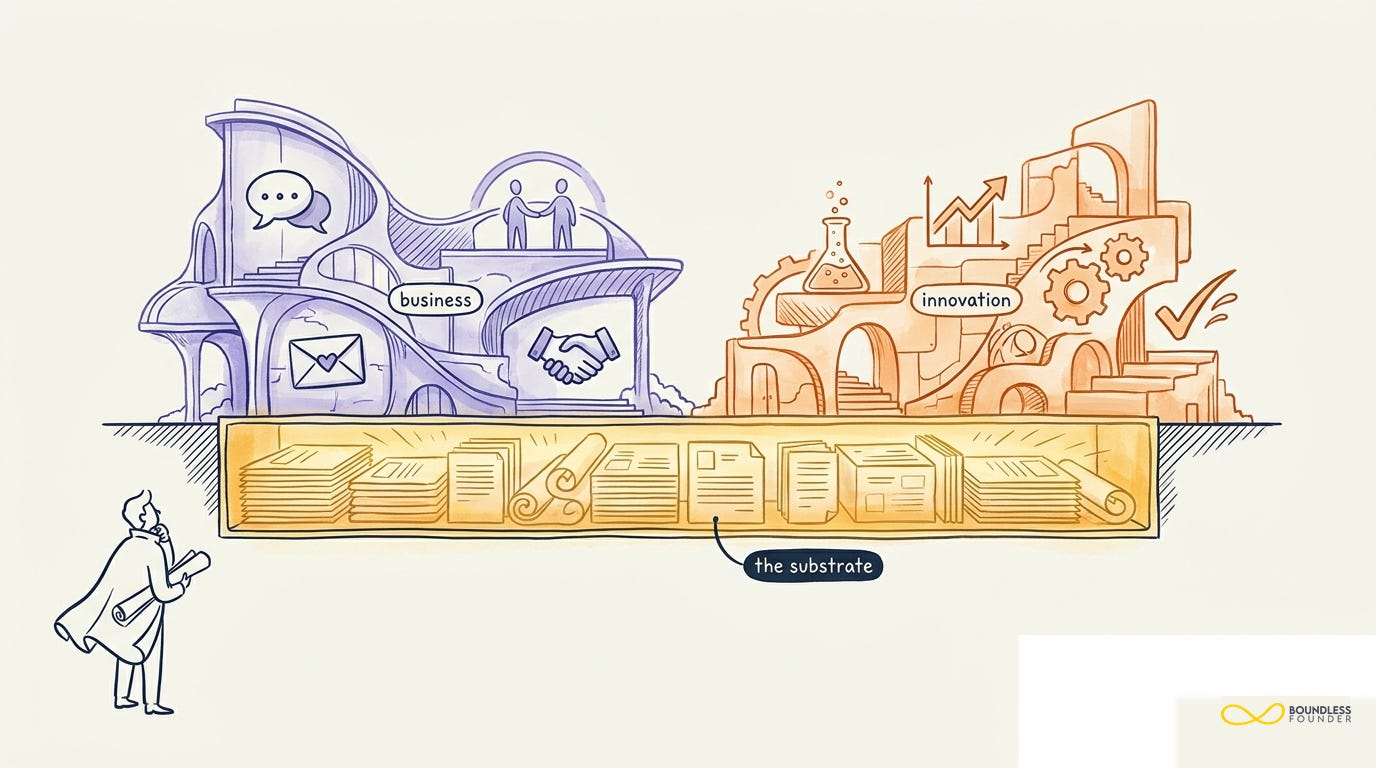
Here's the claim, stated plainly, because it's the original contribution of this series and I'd rather stake it than bury it: an AI-native startup runs two loops on one substrate. Two of the sharpest voices on AI-native companies are each describing one of those loops — and as far as I can tell, nobody has drawn the line between them yet.
The first loop: Hu's company OS
Diana Hu, a partner at Y Combinator, describes the first loop from the outside in — at the altitude of the whole company. Her framing is the one I leaned on last week: companies used to run as open loops, where you made a decision, executed it, and didn't systematically measure the outcome or adjust. Her prescription is to close that loop.
"A closed loop is self-regulating. It continuously monitors its output and adjusts its process to better meet the stated goal. Closed loops are extremely powerful for correctness and stability. With self-improving agents, your company should run as a closed loop" (Hu, YC Startup School).
